Get your free 1-hour consulting session
094825 27825
Details about this medical service
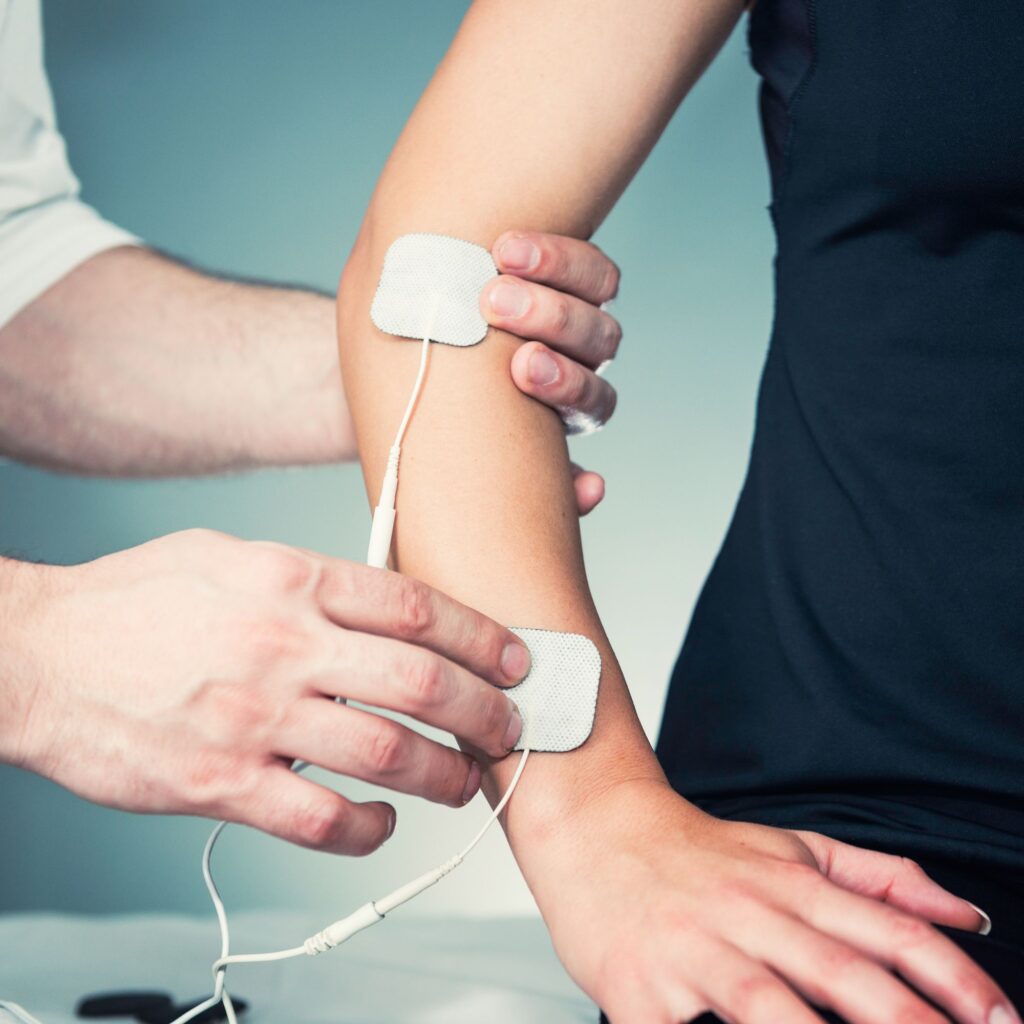
Electrical stimulation or neuromuscular electrical stimulation (NMES) is a technique used to elicit a muscle contraction using electrical impulses. Electrodes, controlled by a unit, are placed on the skin over a predetermined area. Electrical current is then sent from the unit to the electrodes and delivered into the muscle causing a contraction.
Contracting the muscle via electrical stimulation helps improve the way your affected muscle contracts. The physical therapist can change the current setting to allow for a forceful or gentle muscle contraction.
Along with increasing muscle function, the contraction of the muscle also promotes blood flow to the area. This helps the injury heal. NMES can also be used to help decrease muscular spasms by tiring out the muscle that is in spasm. This allows it to relax.
Those muscles also improve their strength through repeated cycles of contraction and relaxation. Electrical stimulation can also “train” muscles to respond to the body’s natural signals to contract. This is an especially helpful benefit for stroke survivors who must essentially relearn basic motor functions.
The type of electrical stimulation that focuses on pain relief sends signals on a different wavelength so they reach the nerves, rather than the muscles. Electrical stimulation can block pain receptors from being sent from nerves to the brain.
Some of the common uses of prescription EMS therapy include:

Improves Muscle Contraction – Strengthens weak or injured muscles by eliciting controlled contractions with electrical impulses.
Prevents Muscle Atrophy – Keeps muscles active after injury, surgery, or illness, reducing the risk of wasting from disuse.
Retrains Muscles After Stroke or Surgery – Supports “muscle re-education” by teaching the brain and muscles to work together again for basic movements.
Enhances Blood Flow & Healing – Boosts circulation to injured areas, accelerating tissue repair and recovery.
Reduces Muscle Spasms – Tired muscles in spasm are encouraged to relax, providing long-lasting relief.
Supports Nerve Injury Recovery – Helps in conditions such as Bell’s Palsy or Foot Drop by stimulating motor nerves and improving movement.
Restores Functional Movement – Encourages muscles to respond to the body’s natural signals, improving coordination and mobility.
Aids Athletic Recovery – Promotes active recovery by flushing lactic acid, reducing cramping, and improving muscle relaxation for athletes.
Non-Invasive & Safe – Provides a drug-free, gentle approach to pain relief and rehabilitation.